Anyone who has worked in PPF sourcing sees a quote that is 20% lower and thinks the same thing: "This is the better deal." Honestly, I was the same way when I first started—whoever was cheaper got the order. But after getting burned a few times, I learned how this industry works: a lower price usually does not mean you actually save money. It just means the cost gets moved to a later stage. By the time the goods arrive, get installed, and the customer comes back with problems, the rework and warranty costs often add up to far more than the 20% you thought you saved. This article breaks down where hidden costs can lurk in a cheap PPF wholesale quote.
1. Look at the Quote First: PPF Sourcing Cost Is More Than Unit Price
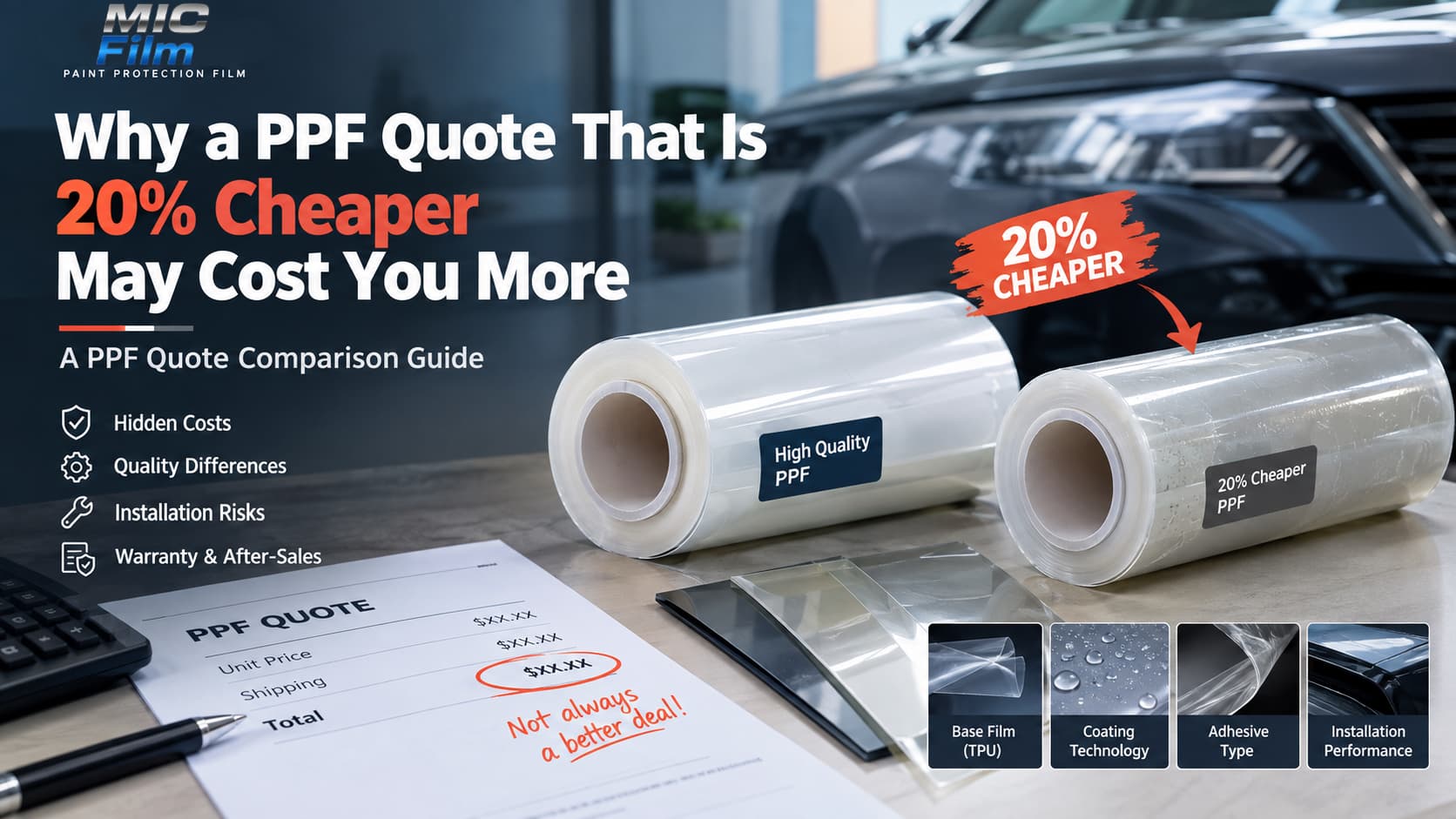
A quote that is 20% lower is almost never because the supplier decided to be generous. It is because the specifications got downgraded. It may say 7.5mil on paper but actually measure 6.8. It may say TPU but not tell you which grade. It may say hydrophobic coating but leave out how thick the coating is or what technology is used. Cut corners in any of these areas, and the unit price drops—so does the performance of the film.
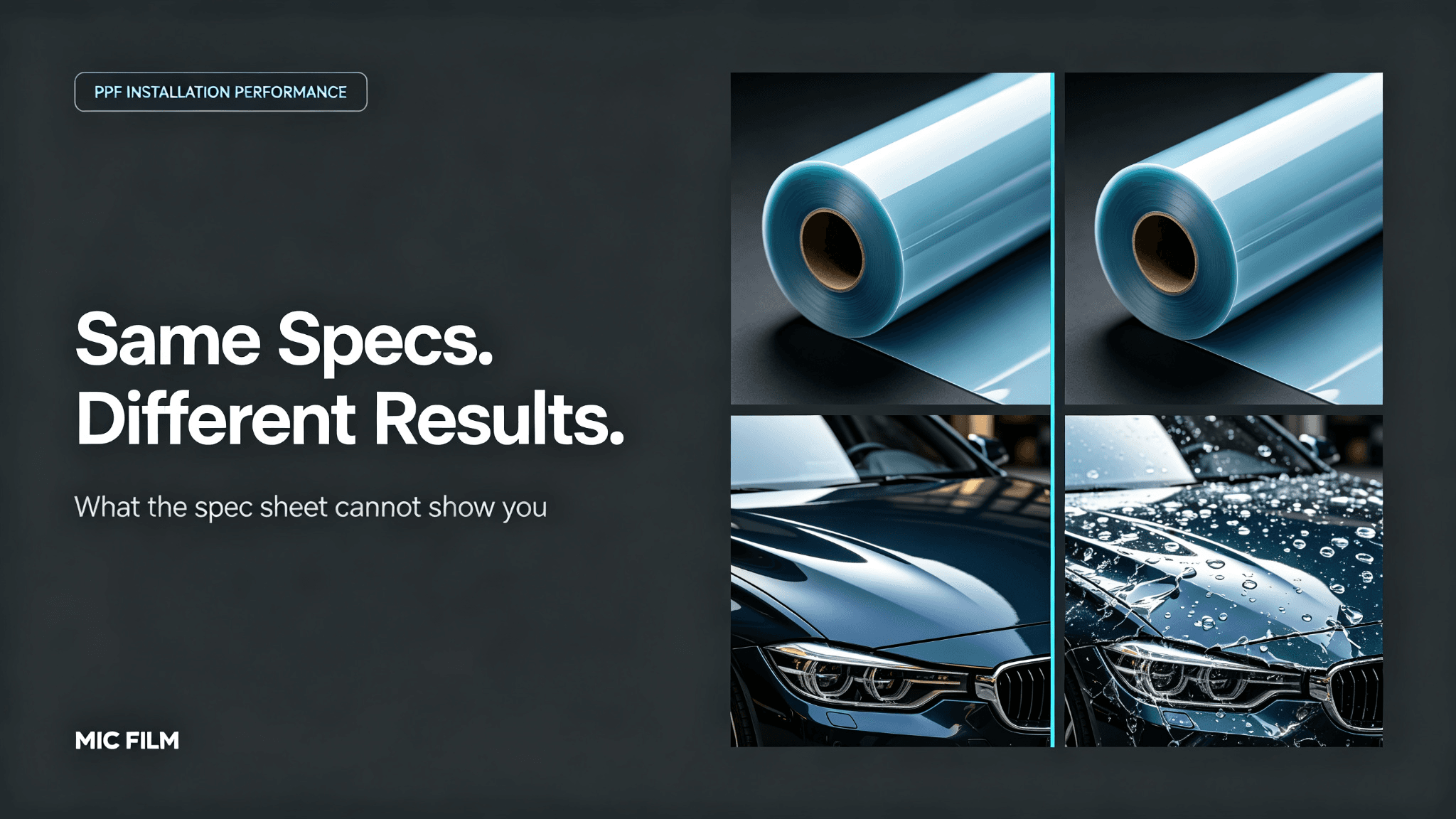
Same Specs on Paper, Different Product in Reality
The cost of PPF comes down to three things: the base film, the coating, and the adhesive. Using Covestro-grade TPU versus a generic material makes a real difference in cost, but both just say "TPU" on the spec sheet. The coating is even trickier. Everything feels smooth and hydrophobic right after installation, but touch it again three to five months later—a good coating is still there, a cheap one is already gone. The adhesive is where things get really ugly. A poor adhesive leaves residue on the paint when you remove the film, and cleaning it off is a nightmare that can also damage the original paint.
So when comparing quotes, do not stop at the line that says "7.5mil TPU PPF." Press for the base film source, coating technology, and adhesive type. If the answers are vague, you already know what is going on. These are the things that truly determine your PPF sourcing cost.
2. The Most Common Trap of Cheap PPF Wholesale: Deferring Costs to Rework
Where cheap films fail most often is during installation. The installer gets halfway through and tells you the film will not stretch or keeps shrinking back, and you know you are in trouble. A film that is hard to install adds 30 minutes to an hour of labor per vehicle, which directly raises your labor cost. Even worse, the edges start lifting a few days after installation, the customer sends you a photo, and you have no choice but to replace the roll for free.
The Most Common Installation Pitfalls
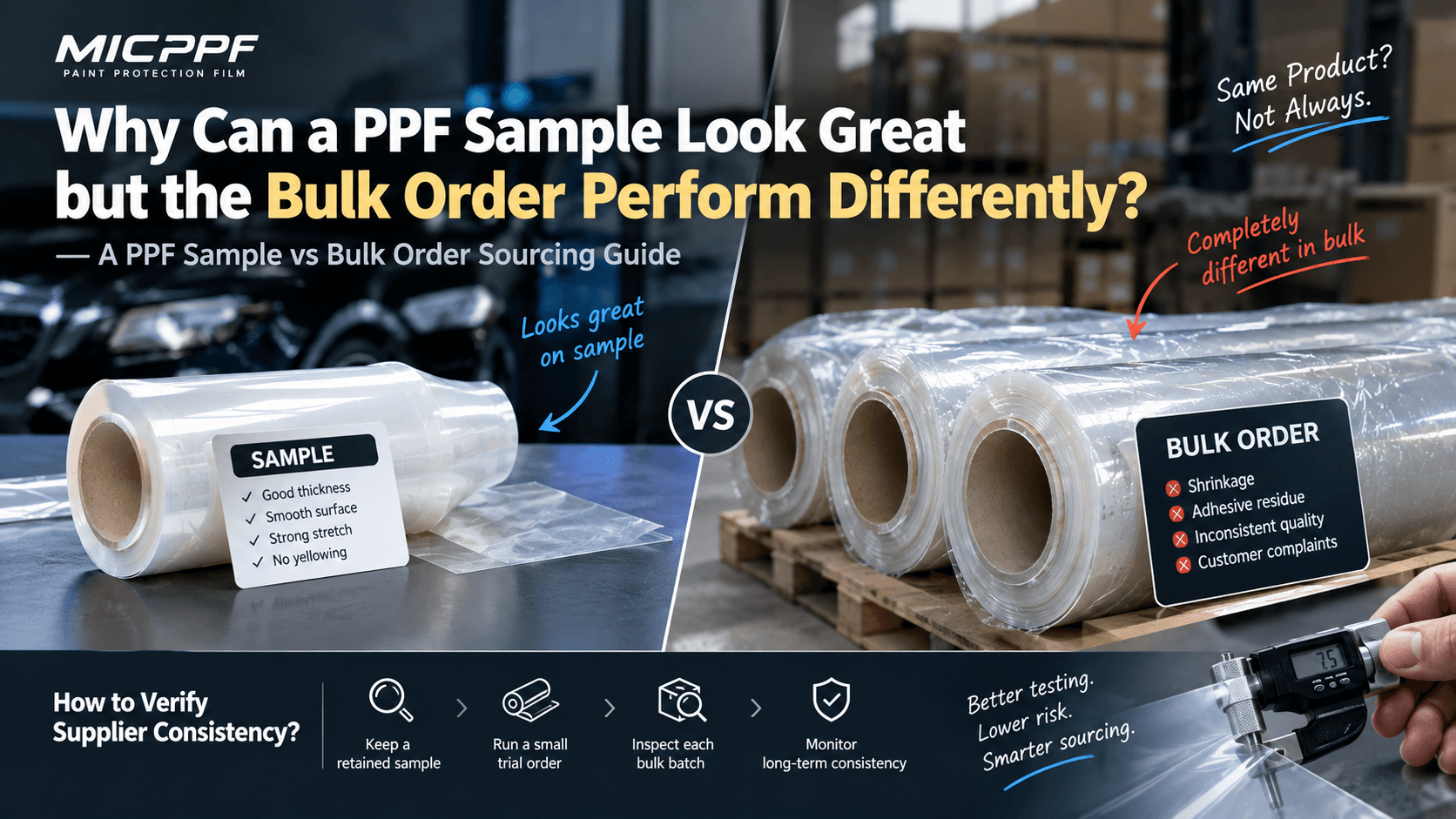
· High shrinkage: edges pull back and expose the paint within days, and the customer comes straight back to you
· Adhesive residue: when the film is removed, glue stays stuck to the paint; the installer spends hours scraping it off and may still damage the paint
· Water spots and orange peel: the film surface itself is uneven, and the finished look is poor enough that the customer is not satisfied
· Poor stretch: complex curves like bumpers will not conform, and forcing the film causes it to whiten or tear—one roll wasted
None of these problems show up on a quote sheet. They only reveal themselves once the film is on a car. And when they do, the material cost, labor cost, and damage to your reputation with the customer add up to far more than 20%. The worst case I have seen: saving a few hundred dollars on a roll of film, then paying over two thousand in rework costs.
3. After-Sales Costs: Where Cheap Suppliers Disappear
Cheap suppliers share another common trait: everything sounds great at the quoting stage. "Do not worry, our quality is solid." "Reach out anytime if there is a problem." But the moment something actually goes wrong, they become impossible to reach. Messages get read but not answered, calls go unanswered, or they find every reason to blame your installation or storage—anything but admit the film is at fault. The warranty is nothing more than a verbal promise, with no written documentation and no test data to back it up. You have zero leverage.
What Does the Warranty Actually Cover?
Before placing an order, get the warranty terms in writing. Do not settle for "ten-year warranty" as an empty promise. Ask for specifics:
· How many years against yellowing? Is there a third-party accelerated aging test report?
· How long does the self-healing function last? What standard is it tested against?
· Does it cover edge lifting, bubbling, and water spots?
· When something goes wrong, how is the claim handled—film replacement or refund? And how long does it take?
A reliable supplier will give you clear answers to all of these and can issue a written warranty letter. If all you get is "do not worry, our quality is good," move on.
4. How to Compare Quotes Without Getting Burned: The Right Approach to PPF Quote Comparison
A lower price is not automatically a bad thing, but you need to understand why it is lower. The right way to do a PPF quote comparison is not to chase the smallest number on the sheet—it is to compare total cost.
What to Test When You Get Samples
No matter how attractive the quote is, get samples and test them yourself. Do not take their word for it:
· Measure thickness: use a micrometer and see how close it gets to the claimed spec; anything off by more than 0.5mil is a red flag
· Test stretch and recovery: pull it hard by hand to check elongation, then let go and see how fast it shrinks back
· Do a trial install: have an installer apply a small piece and see how it handles, whether it traps air, and how cleanly the edges can be tucked
· Test yellowing: leave it outdoors for a month or two, or use UV light for accelerated testing, and see how quickly it yellows
MIC Film offers free samples, so you can test the product in person before deciding whether to work together. That is more reliable than any spec sheet. For the full product lineup and specifications, see our PPF products page.
Calculate Total Cost, Not Just Unit Price
Your real PPF sourcing cost should be calculated like this: unit price + installation waste + warranty reserve + the hidden cost of losing customers. If a cheaper film has 5% more waste and 3% more warranty claims, it can end up costing more than a film that is 20% more expensive. For a first-time partnership, never place a large order just because the price is low. Start with a small trial batch of one or two SKUs, run it through the full cycle—installation, sales, after-sales—and only scale up once everything checks out.
Final Thoughts: a Lower Price Can Be the Right Choice—If You Know Why It Is Lower
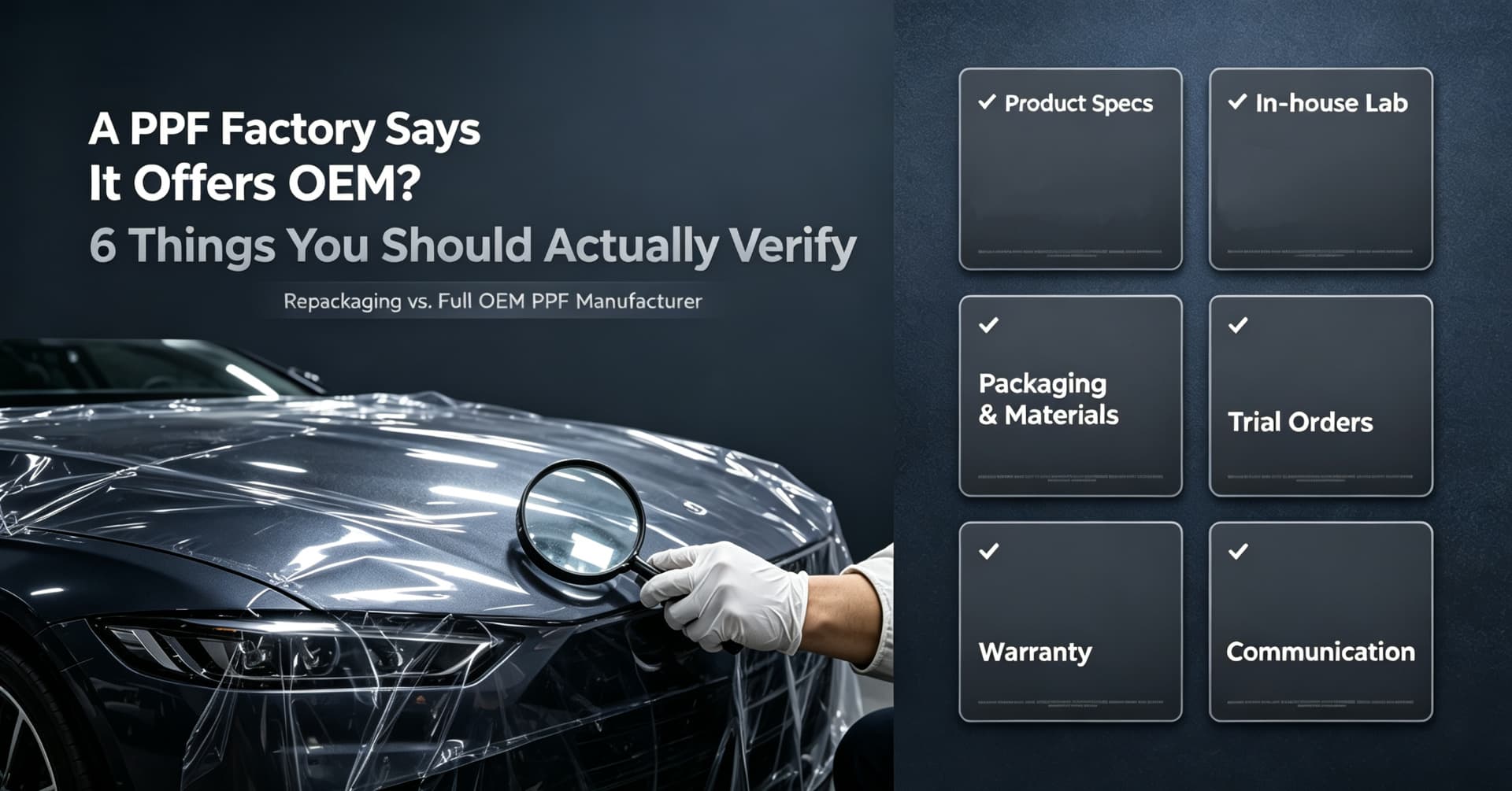
To be honest, there is no such thing as an unexplained low price in the PPF industry. If a quote is 20% lower, there is a reason—either the base film is downgraded, the coating is thinner, or the supplier has no intention of standing behind the product after the sale. As a buyer, your job is not to squeeze the price down as hard as possible. It is to understand exactly where every dollar of difference comes from.
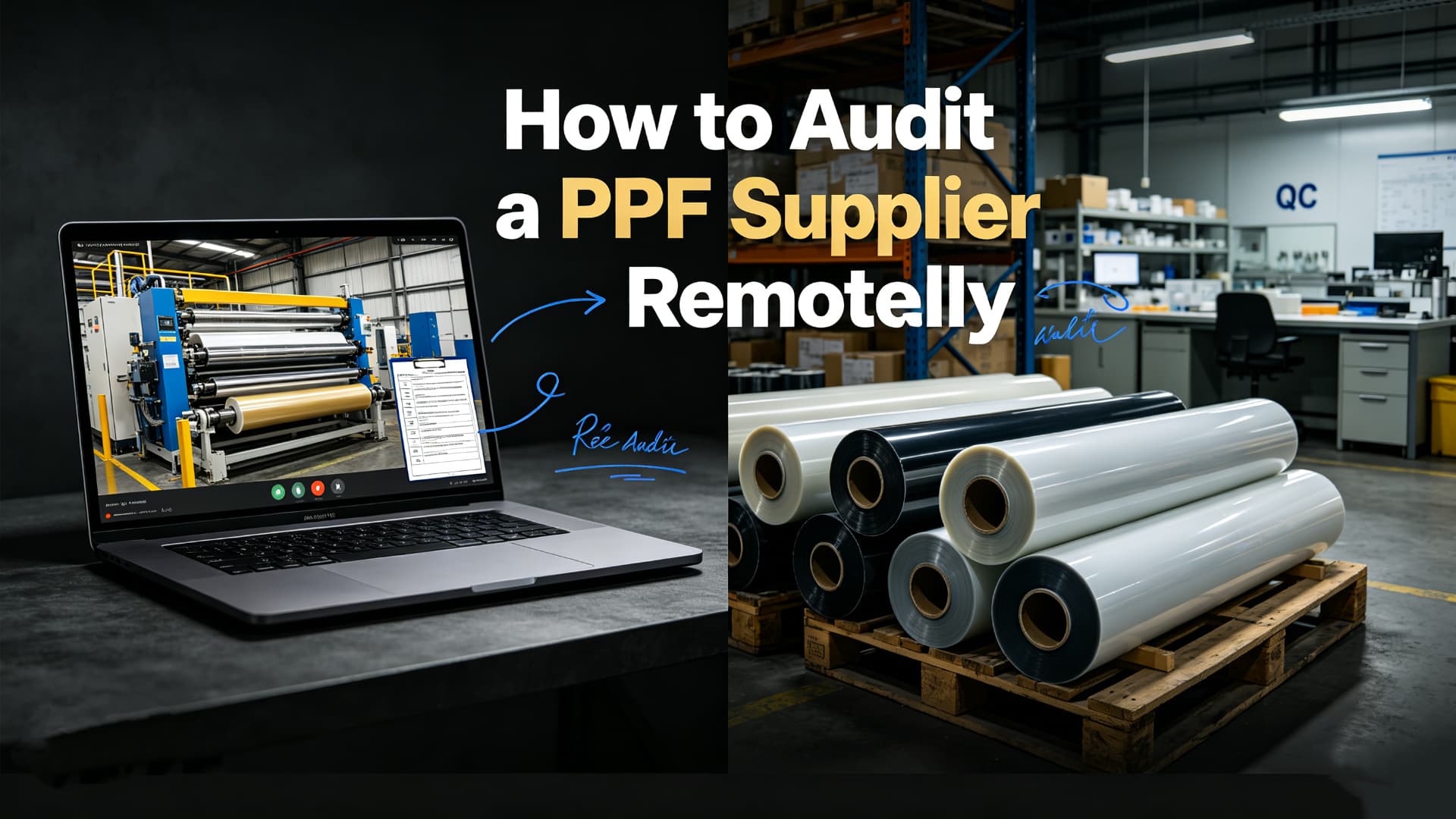
If you are currently comparing suppliers, do not rely on quote sheets alone. Get samples, run small-batch tests, and let the actual data speak. To learn about our factory background and quality control process, see the About MIC Film page. For samples and a quote, just contact us. For more practical content on PPF sourcing and product selection, browse our blog.
FAQ
1. Is it normal for PPF quotes to differ by 20%?
Very normal. Switching the base film, coating, or adhesive can easily shift the cost by 20% or more. The question is not whether the gap is large—it is whether you can identify what is causing it. Is it genuine efficiency and scale, or are the specifications being quietly downgraded? Testing a sample will tell you.
2. Does a cheaper PPF film always mean worse quality?
Not necessarily. Some large manufacturers with strong supply chains can genuinely offer more competitive pricing. But realistically, a quote that is significantly below the market average usually means corners were cut on the base film or coating. Do not gamble on it—test the sample, that is the safest approach.
3. How do I tell if a supplier has downgraded the specs in their quote?
Three steps: First, press for detailed specs—where the base film comes from, what coating technology is used, what type of adhesive. Second, request third-party test reports for yellowing, stretch, and thickness. Third, get samples and test them yourself—micrometer the thickness, have an installer do a trial application, and leave it outdoors for a couple of months. Walk through all three, and you will have a pretty clear picture.
4. When a cheap PPF film causes problems, how do suppliers typically handle it?
It depends on the supplier. A reliable one has written warranty terms and follows a clear claims process—replacing film or compensating as agreed. The cheap ones usually stall: slow replies, endless excuses, and eventually they offer a small partial replacement of film, with no coverage for labor or installation costs. This is exactly why you need to confirm the warranty is in writing before you start, not after a problem comes up.
5. For a first-time partnership, what order quantity is safe?
Do not place a large order just because the price is attractive. Start with a small trial batch of one or two SKUs, run the full cycle—installation, sales, after-sales—and only increase the quantity once everything works. I have seen too many people go all-in on a cheap first order and get burned.