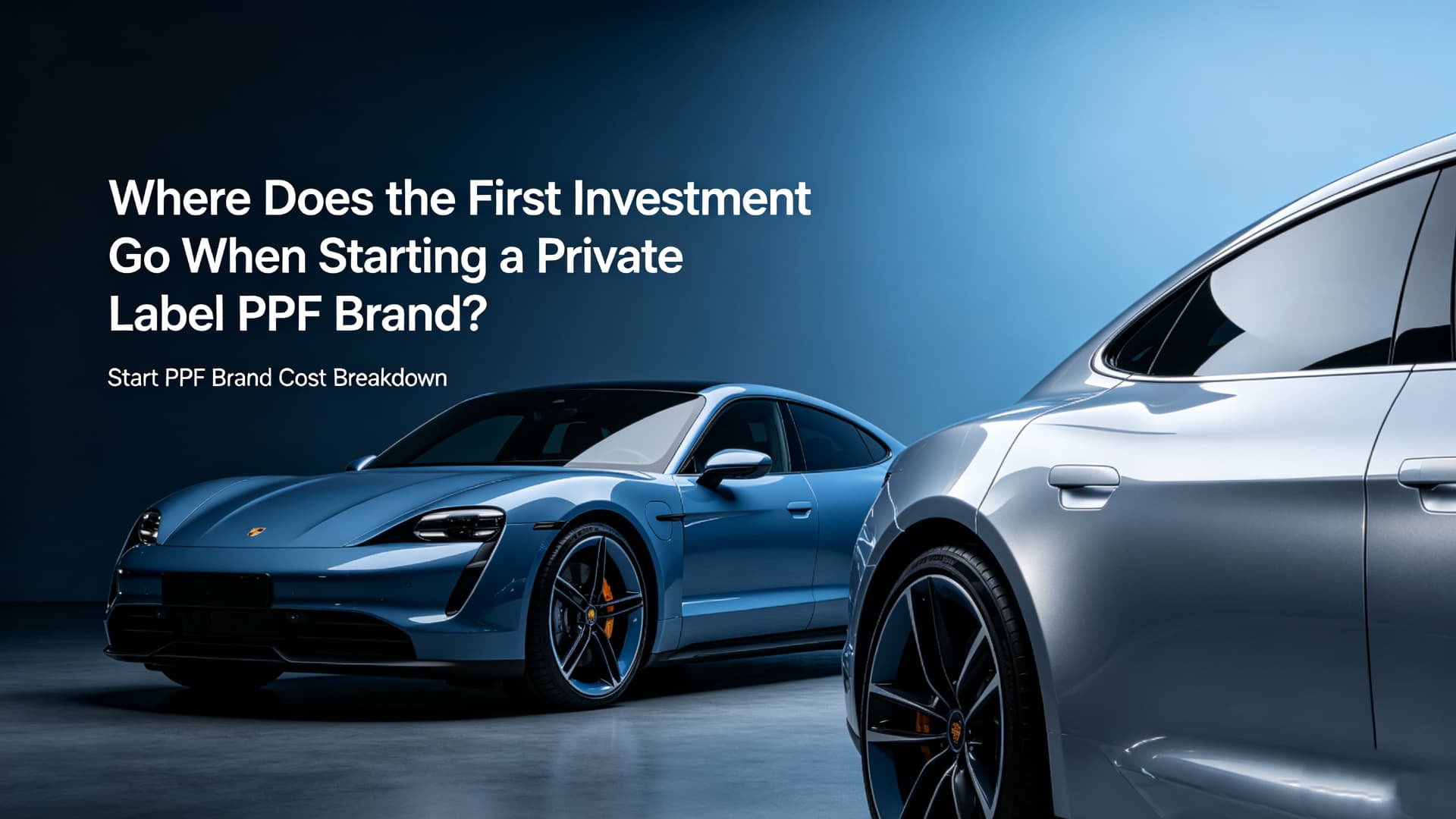
A lot of people who want to start their own PPF brand ask the same question first: "How much money do I need?" There is no one-size-fits-all answer—target market, product positioning, and existing channels can each shift the total by several times. Instead of fixating on a total figure, break the costs down: when you launch a PPF brand, where does the first round of money typically go? Once you see the main expense categories, calculating your own startup budget becomes much easier.
1. Initial Inventory: The Biggest Chunk of Your Private Label PPF Cost
When starting your own brand, the largest expense is usually the first batch of products.
How Many SKUs Should You Start With?
PPF is TPU-based, but costs vary across thicknesses, coatings, and product lines. 6.5mil works for volume sales, 8.5mil+ targets higher impact resistance, and color PPF or sunroof films are separate categories. Start with 1–2 core SKUs rather than a full lineup. See our PPF products page for available options.
How to Negotiate MOQ
MOQ varies widely by supplier. Some support small batch trial orders—MIC Film does, for example—so you can test the market with a small quantity first. Do not just look at unit price; factor in supplier stability, MOQ, and replenishment costs together.
2. Branding and Packaging: Turning a White-Label Product Into Your Brand
Private label is not just slapping on a logo—every detail the customer sees is part of the brand experience.
What Does Custom Packaging Include?
· Brand visual design: logo, colors, typography
· Roll labels: brand name, specs, batch number
· Outer cartons: shipping box design
· Supporting materials: manuals, warranty cards, stickers, toolkits
Some OEM suppliers handle design and packaging in-house, saving you from coordinating with separate vendors.
3. Sample Testing and Validation: Do Not Skip This Step
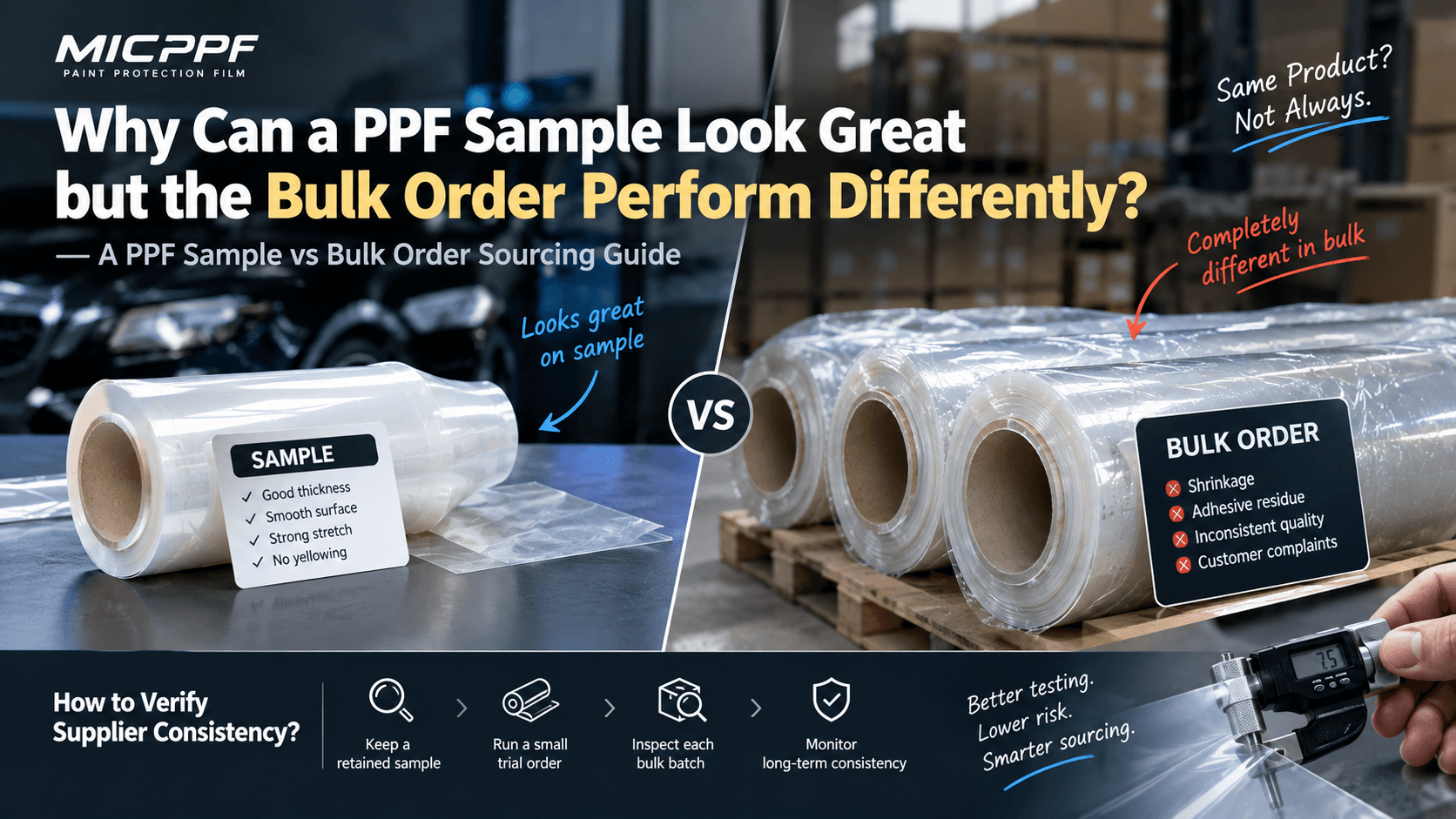
Testing samples before a bulk order is standard practice for any PPF brand.
What Metrics Should You Test?
Self-healing, hydrophobic durability, anti-yellowing, stretch, and install workability—skip these and the cost of customer claims will far exceed what you spent on samples.
Where to Get Samples
Request them from suppliers or buy competing products for comparison. MIC Film offers free samples so you can verify quality before ordering. Samples cost little, but do not skip testing. Third-party test reports, if required, are an extra cost.
4. Logistics and Warehousing: The Product Is Not Yours Until It Reaches You
Factory quotes are usually EXW, so logistics costs to your door cannot be overlooked.
What Does Logistics Typically Include?
· International shipping: sea (slow/cheap), air (fast/expensive), express (small batches)
· Customs and duties: rates vary by country—check in advance
· Local warehousing: own facility or third-party
· Rewinding and distribution: may need to rewind/relabel for distributors
Choosing Logistics for Small vs. Large Volumes
For small first batches, express or air freight costs more per unit but reduces inventory pressure. Once orders stabilize, sea freight plus local warehousing usually amortizes costs better. Some suppliers offer DDP—one price, shipping and customs handled.
5. Marketing and Channel Launch: It Is Not a Brand Until It Sells
Getting product into your warehouse is only the first step; you still need the market to sell your film.
What Are Common Startup Expenses?
· Brand website and online assets
· Industry trade shows and events
· Channel support (samples, training materials)
· Content and advertising (SEO, social, paid)
Existing channels save you a lot here; starting from zero means budgeting for market education.
6. Compliance and Local Market Access
Import and sales requirements for automotive film vary by country. Some markets require environmental tests, weathering tests, or importer registration. Confirm your target market's compliance requirements before ordering.
Final Thoughts: Budget Allocation Tips for Your Launch PPF Brand Journey
Add up the six categories, and that is your start PPF brand cost. For first-time brands, take a phased approach: confirm the product with samples, test the market with a small batch, then scale inventory and marketing once it works. No need to sink everything in at the start.
If you are looking for a supplier, start with samples and small quantities. To learn about our factory background, see the About MIC Film page.
For specific product specs and partnership options, contact us for samples and a quote. More content is on our blog.
FAQ
1. What is the minimum startup capital for a private label PPF brand?
No universal answer—it depends on market, positioning, and order quantity. The biggest expense is initial inventory. Start with a small trial batch, then scale.
2. What is the difference between private label and reselling an existing brand?
Reselling launches faster but margins are thin and you have no pricing power. Private label means your own brand, margins, and pricing power—but you invest in branding and marketing.
3. Can I test samples before building a brand?
Yes, and we recommend it. Test quality and install workability first, then move to bulk ordering and customization.
4. How many SKUs should I start with?
Start with 1–2 core SKUs, then expand. See our PPF products page for specifics.
5. What is the typical process with an OEM supplier?
Discuss requirements → sample testing → confirm specs → design packaging → small trial order → market validation → bulk order.
References
- Grand View Research — Paint Protection Film Market Size, Share & Trends Analysis Report
- Fortune Business Insights — Paint Protection Film Market Size, Share & Industry Analysis
- Covestro — New Desmopan® UP TPU Series for Paint Protection Film
- Covestro — One TPU, Endless Films: Versatile Texin® & Desmopan® for Film & Sheet Innovation
- KSB Window Film — How to Start Your Own PPF Brand
- KSB Window Film — How Paint Protection Film Is Manufactured