Introduction to Window Film for Buildings
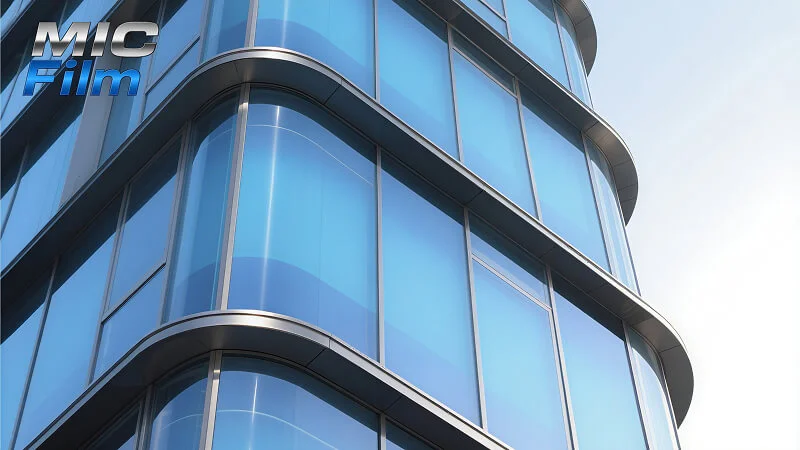
Window film for buildings is an innovative solution that enhances the functionality and aesthetics of architectural spaces. This versatile material, applied directly to glass surfaces, offers a range of benefits from energy savings to improved safety. As modern buildings prioritize sustainability and comfort, window film for buildings has become a go-to option for property owners and managers seeking cost-effective upgrades without major renovations.
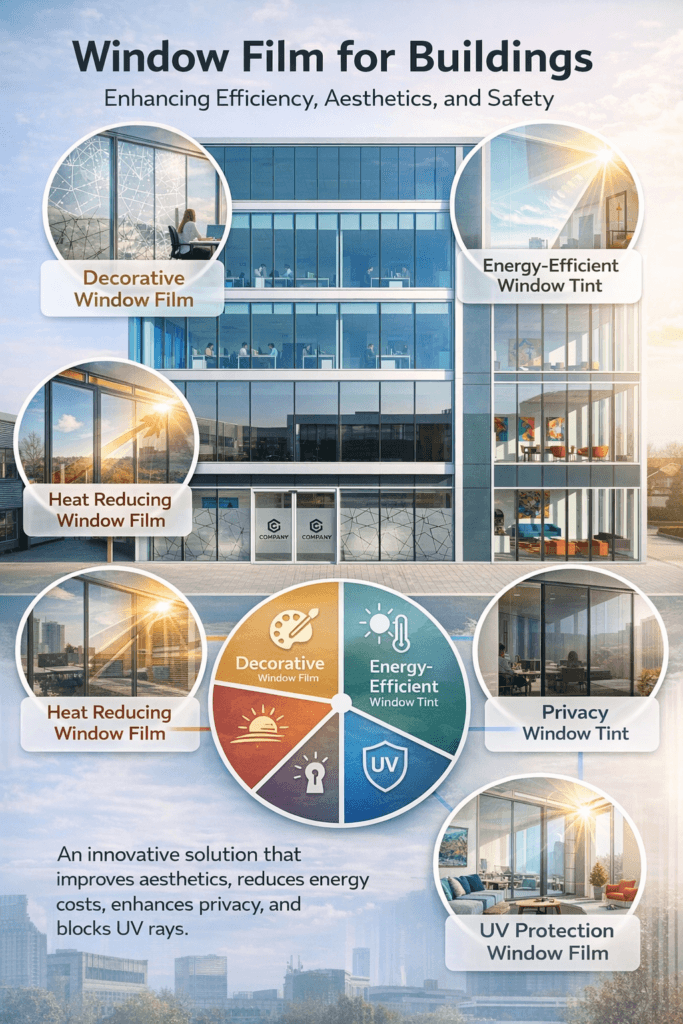
Decorative Window Film: Enhancing Aesthetics
Decorative window film transforms ordinary glass into stunning visual elements. Available in various patterns, colors, and textures, this type of film allows architects and designers to customize facades and interiors. For instance, decorative window film can mimic frosted glass for a sophisticated look or feature intricate designs that add privacy while maintaining natural light flow. In commercial settings, it serves as branding tool, displaying logos or motifs directly on windows. Beyond beauty, it protects glass from scratches and fading, ensuring long-term vibrancy. Property developers often choose decorative window film to elevate the appeal of office spaces, retail storefronts, and residential lobbies, making environments more inviting and unique.
Energy-Efficient Window Tint: Reducing Costs
Energy-efficient window tint is a key application of window film for buildings, focusing on thermal regulation. By reflecting solar heat, this film minimizes the need for air conditioning, leading to significant reductions in energy consumption. In hot climates, it can block up to 80% of heat gain, keeping interiors cooler and more comfortable. This not only lowers utility bills but also contributes to green building certifications like LEED. Energy-efficient window tint also improves insulation during winter, preventing heat loss. Building managers appreciate its quick installation and minimal disruption, making it ideal for retrofitting existing structures. Overall, investing in energy-efficient window tint proves to be a smart financial move for long-term savings and environmental responsibility.
Heat Reducing Window Film: Comfort and Efficiency
Heat reducing window film targets solar radiation to create more livable spaces. Unlike traditional curtains, this film works invisibly, allowing unobstructed views while curbing temperature spikes. It absorbs and dissipates infrared rays, which are primary culprits behind indoor overheating. In high-rise buildings, heat reducing window film prevents hot spots near windows, enhancing occupant comfort and productivity. Studies show that spaces with this film experience up to 15-degree cooler temperatures, reducing reliance on mechanical cooling systems. Additionally, it pairs well with other films for comprehensive protection. For facilities like hospitals or schools, where consistent temperatures are crucial, heat reducing window film offers reliable performance without compromising natural daylight.
Privacy Window Tint: Security and Discretion
Privacy window tint provides a discreet barrier against prying eyes, essential for urban buildings. This one-way film allows outward views during the day while preventing outsiders from seeing inside, ideal for conference rooms or executive offices. At night, when interior lights are on, it maintains privacy through reflective properties. Privacy window tint comes in varying opacity levels, from subtle sheens to full blackout options, catering to different needs. It also deters break-ins by making it harder to assess valuables inside. Beyond security, it reduces glare from streetlights or neighboring structures, improving focus in work environments. Integrating privacy window tint into building designs ensures a balance between openness and confidentiality, fostering secure and serene atmospheres.
UV Protection Window Film: Safeguarding Health and Interiors
UV protection window film shields against harmful ultraviolet rays that penetrate glass. These rays cause skin damage, eye strain, and premature aging of furniture and flooring. By blocking up to 99% of UVA and UVB wavelengths, this film protects occupants’ health and preserves interior aesthetics. In sun-exposed buildings, UV protection window film prevents fading of carpets, artwork, and upholstery, extending their lifespan. It’s particularly beneficial in regions with intense sunlight, where unprotected windows accelerate material degradation. This film is clear and non-intrusive, maintaining transparency while delivering robust defense. Health-conscious building owners opt for UV protection window film to comply with wellness standards and reduce long-term maintenance costs.
In summary, window film for buildings integrates multiple benefits into one solution, addressing aesthetic, energetic, and protective needs. Whether through decorative window film, energy-efficient window tint, heat reducing window film, privacy window tint, or UV protection window film, these applications elevate building performance. As technology advances, expect even more durable and customizable options, making window film indispensable for contemporary architecture.
FAQ
1) How long does window film for buildings typically last?
Lifespan depends on film type, glass conditions, sun exposure, and installation quality. Many architectural films are designed for long-term use, especially when professionally installed and maintained, but actual service life varies by product and site conditions.
2) Will energy-efficient window tint make rooms too dark?
Not necessarily. Films come in different visible light transmission (VLT) levels—from nearly clear to heavily tinted. You can select a film that prioritizes heat control while still maintaining bright interiors and natural daylight.
3) Can heat reducing window film be applied to any glass?
Most glazing can accept certain films, but compatibility matters—especially for double-pane, tempered, laminated, and Low-E glass. A proper glass-and-film compatibility check helps avoid issues like thermal stress.
4) Does privacy window tint work at night?
One-way privacy effects are strongest when the outside is brighter than inside (typically daytime). At night, if interior lights are on, silhouettes may be visible. For stronger nighttime privacy, consider higher-opacity films, frosted/decorative options, or layered privacy solutions.
5) Is UV protection window film still useful if the glass already blocks some UV?
Yes. Many glass types block a portion of UV, but UV-focused films are designed to dramatically increase UV filtering and can help reduce fading and UV exposure more consistently across different glazing types.
6) Can decorative window film replace etched or frosted glass?
In many cases, yes—decorative window film can mimic frosted or etched looks at a lower cost and with faster installation. It’s also easier to update later (for rebranding, design refreshes, or tenant changes).
7) How do I choose the right film for my building?
Start with your primary goal (energy savings, heat reduction, privacy, UV protection, or aesthetics). Then compare key performance metrics (e.g., SHGC/solar control performance, glare reduction, UV rejection, VLT). A site assessment (orientation, climate, glass type, usage) helps narrow the best option.
8) Can window film contribute to sustainability goals like green building programs?
Window films are often used as retrofit measures to improve comfort and reduce solar heat gain, which can support energy-efficiency strategies. Credit eligibility varies by project and certification system, so documentation and performance targets should be reviewed on a case-by-case basis.
References
[1] Windows, Doors, and Skylights (https://www.energy.gov/energysaver/windows-doors-and-skylights)
[2] UV Window Film & Tint (https://www.skincancer.org/skin-cancer-prevention/sun-protection/uv-window-film/)
[3] Benefits of Window Film (https://iwfa.com/benefits-of-window-film/) International Window Film Association
[4] Energy Control Window Films (https://www.astm.org/news/energy-control-window-films-nd14)
[5] Energy | 3M Building Window Solutions (https://www.3m.com/3M/en_US/building-window-solutions-us/solutions/energy/)