Understanding OEM Paint Protection Film
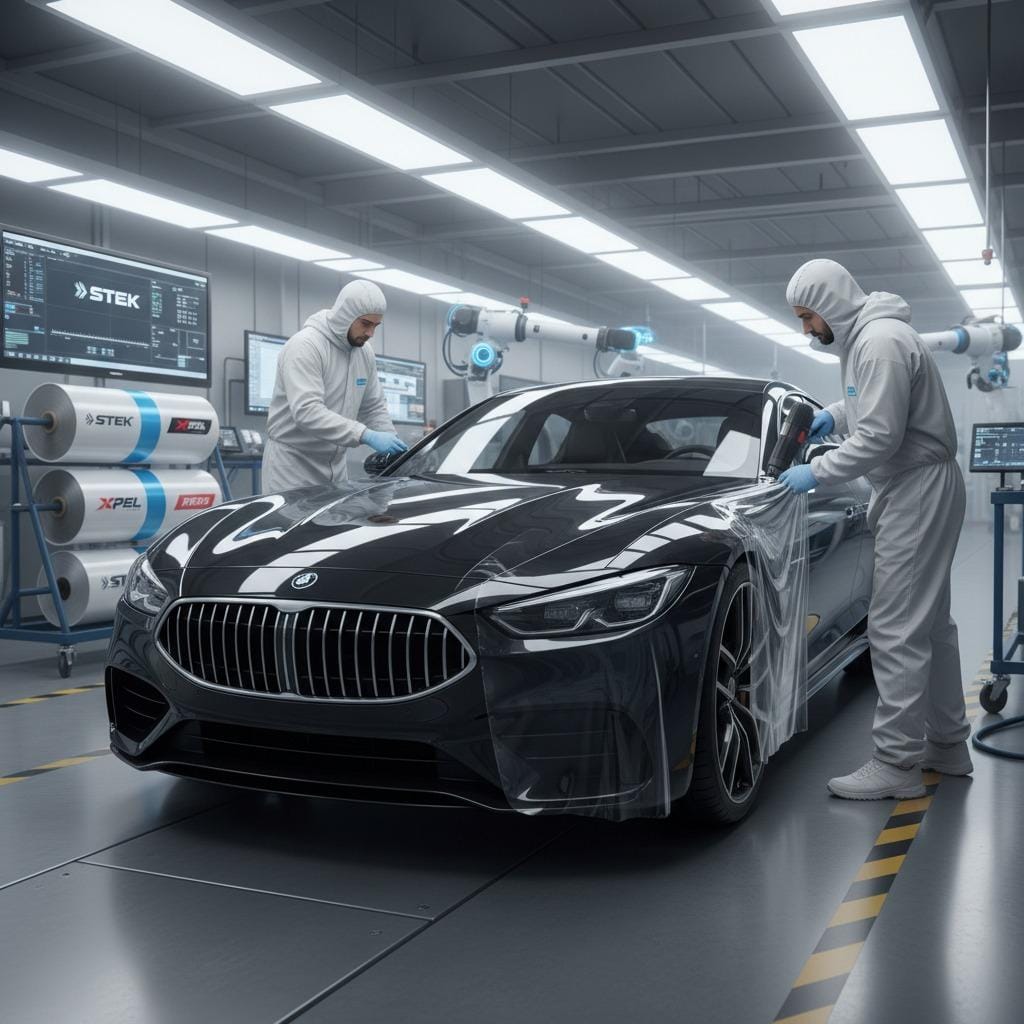
OEM paint protection film is increasingly positioned as a premium add-on in dealer programs and a reliable revenue driver for professional installers and B2B buyers. For a ppf distributor, the OEM angle matters because it sets expectations for consistency – clarity, adhesive stability, low defect rates, and repeatable installation outcomes across batches.
For wholesale customers, “OEM paint protection film” should be interpreted as a spec-driven product class: stable tack, controlled stretch, predictable self-healing behavior, and a clean removal profile that supports long-term customer satisfaction. If you are sourcing as a paint protection film supplier or running a pro shop with multiple installer teams, the goal is not just protection – it’s reducing rework, improving throughput, and keeping complaint rates low.
What business buyers should confirm before stocking
Roll-to-roll consistency (clarity, orange peel level, topcoat feel)
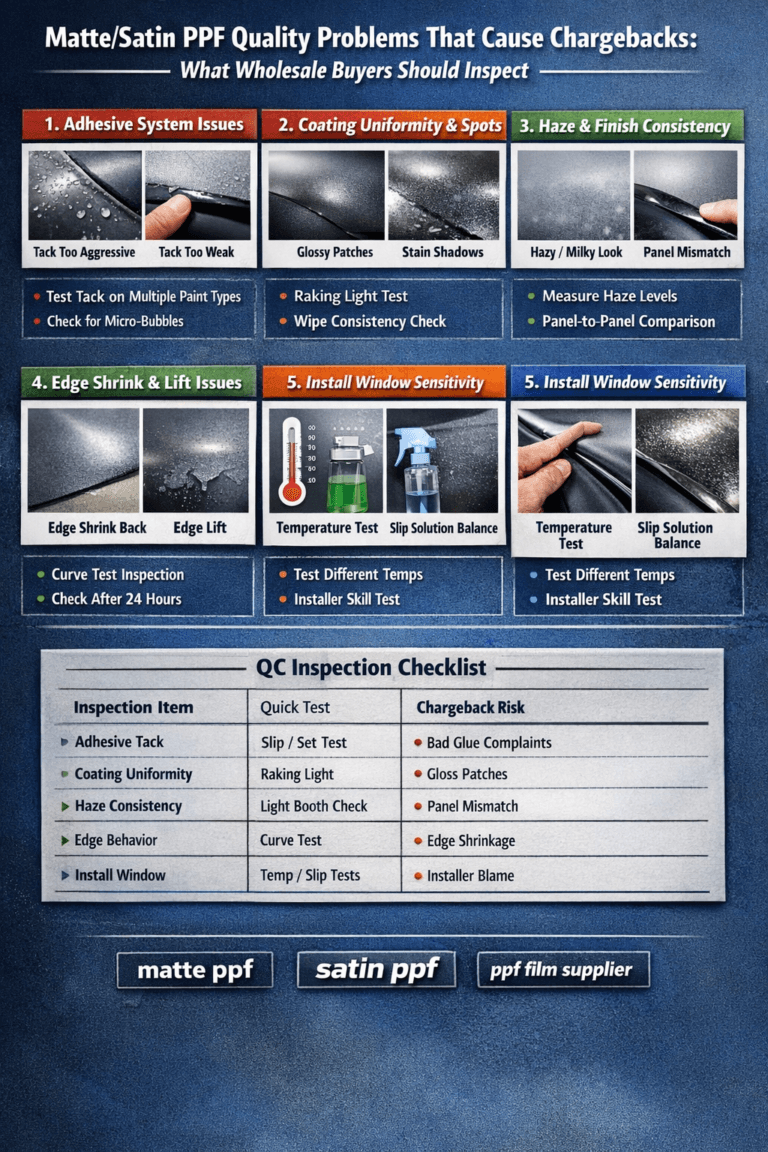
Adhesive performance (initial tack vs reposition, edge stability, glue lines)
Warranty terms aligned with your market positioning
Training, installation support, and claim handling from the ppf supplier
Types of Clear Paint Protection Film (PPF)
Clear paint protection film (ppf) remains the core SKU for most wholesale programs because it fits the broadest range of vehicles and customer budgets. In commercial terms, clear PPF is sold as performance tiers defined by topcoat type, thickness, gloss level, and hydrophobic behavior – all of which affect installer speed and end-customer satisfaction.
For stocking and distribution, the paint protection film roll format is usually the highest-efficiency inventory unit. Rolls allow you to service multiple installers and vehicle types while keeping SKU count manageable. If you support custom patterns, bulk rolls still matter because they serve as backup inventory and cover edge cases and oversized panels.
Common wholesale segmentation for clear PPF
Entry-level clear PPF: baseline protection, cost-driven programs, higher turnover
Mid-tier clear PPF: improved topcoat feel, better self-healing response, fewer callbacks
Premium clear PPF: high gloss, strong hydrophobicity, better stain resistance, stronger warranty story
Roll considerations that impact your margins
A paint protection film roll is not just a packaging decision – it influences waste rate, cutting time, and install success. When evaluating roll SKUs, focus on the practical details that affect throughput.
| Wholesale Factor | What to Check | Why It Matters to Distributors and Shops |
|---|---|---|
| Roll width options | Common widths used in your market | Reduces scrap and expands job coverage |
| Thickness consistency | Spec tolerance across batches | Controls install feel and warranty risk |
| Liner quality | Tear resistance, anti-static behavior | Prevents contamination and handling issues |
| Adhesive behavior | Reposition time, edge lift resistance | Impacts install speed and returns |
| Topcoat performance | Self-healing and hydrophobic stability | Drives customer reviews and repeat business |
The Role of PPF Suppliers and Manufacturers
In B2B reality, the “best film” is the one that stays consistent under pressure – rush installs, cold weather, complex curves, and varying installer skill. That’s why choosing a paint protection film supplier matters as much as choosing a product line.
A strong ppf manufacturer typically distinguishes itself through quality control, traceability (batch management), and stable raw material sourcing. Meanwhile, a capable ppf supplier or ppf distributor provides what most shops actually need: predictable lead times, clear policies for defects, training resources, and a supply plan that won’t break during seasonal spikes.
How distributors can structure a reliable supply program
Build a tiered catalog (good-better-best) so your resellers can sell by budget
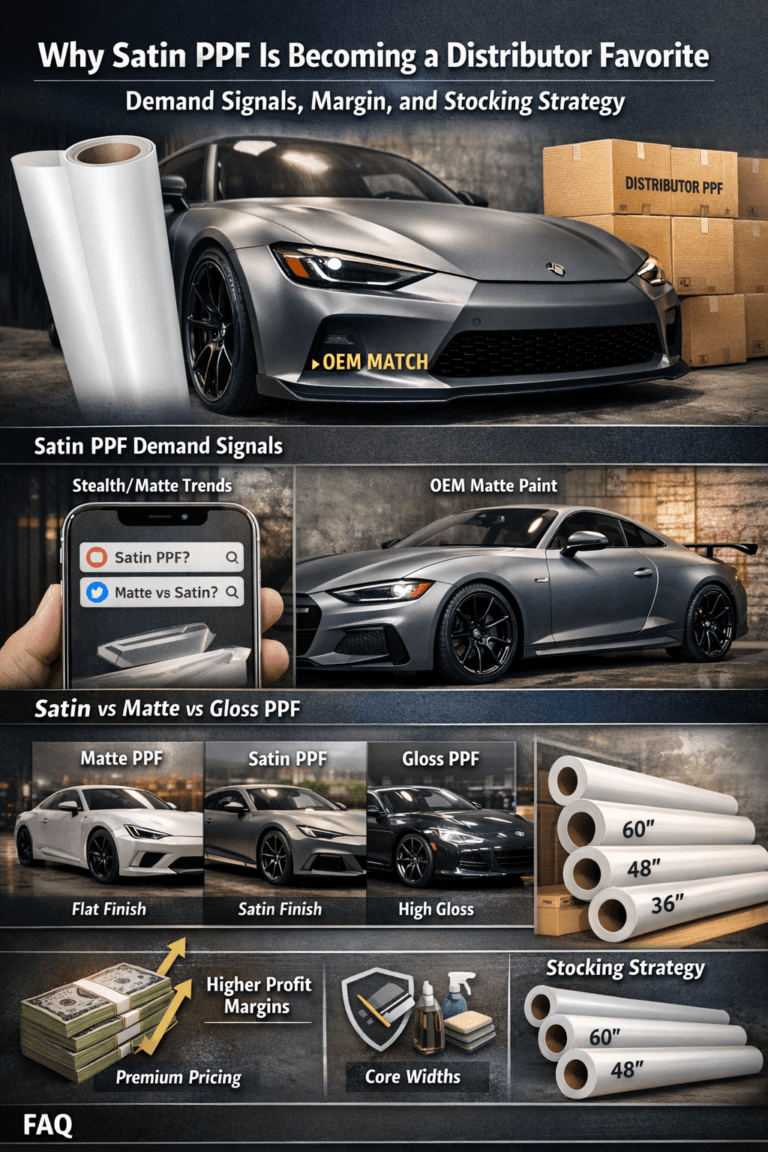
Standardize a few core roll SKUs to simplify inventory and forecasting
Offer sample kits and installer feedback loops to reduce product churn
Ensure your paint protection film supplier can support claim resolution quickly
Where “stek wholesale” fits
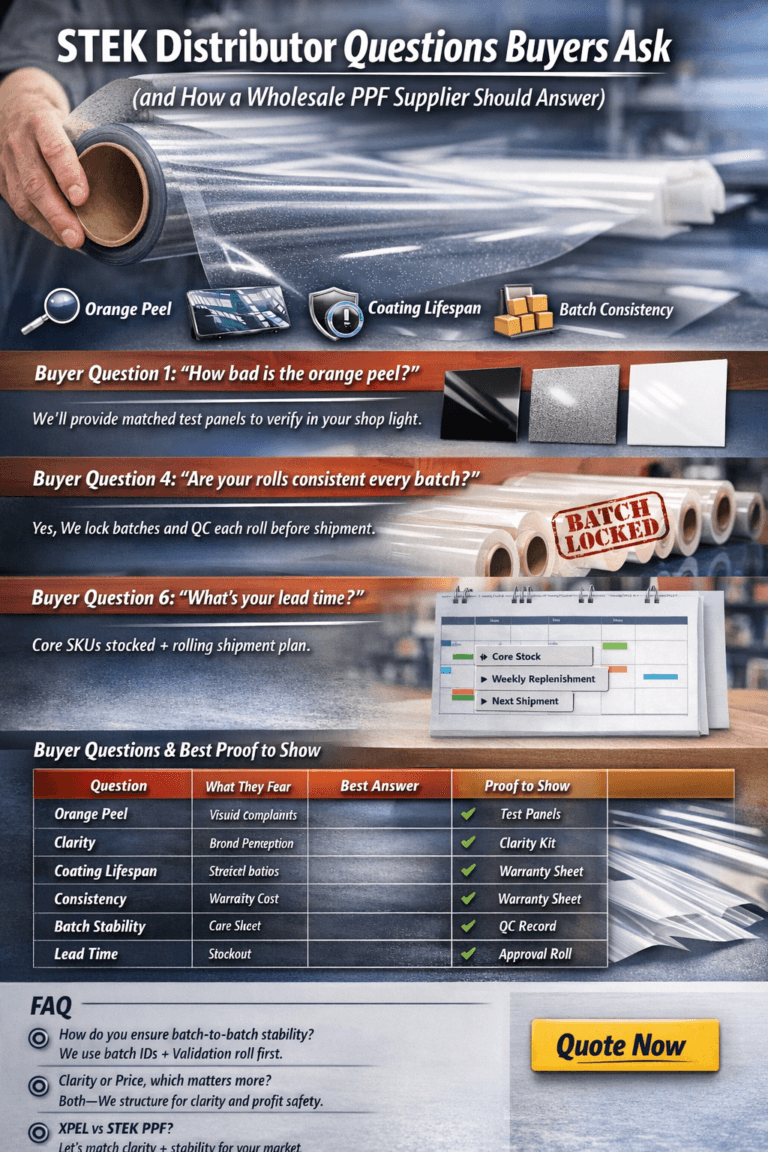
If your market responds strongly to gloss, clarity, and hydrophobic performance, stek wholesale programs can be positioned as premium inventory with an “installer-friendly” narrative. Many shops also like having a recognizable brand (stek ppf) to help close retail sales faster. From a distribution perspective, the key is to verify consistency and after-sales support, not just brand demand.
Comparing STEK PPF vs XPEL
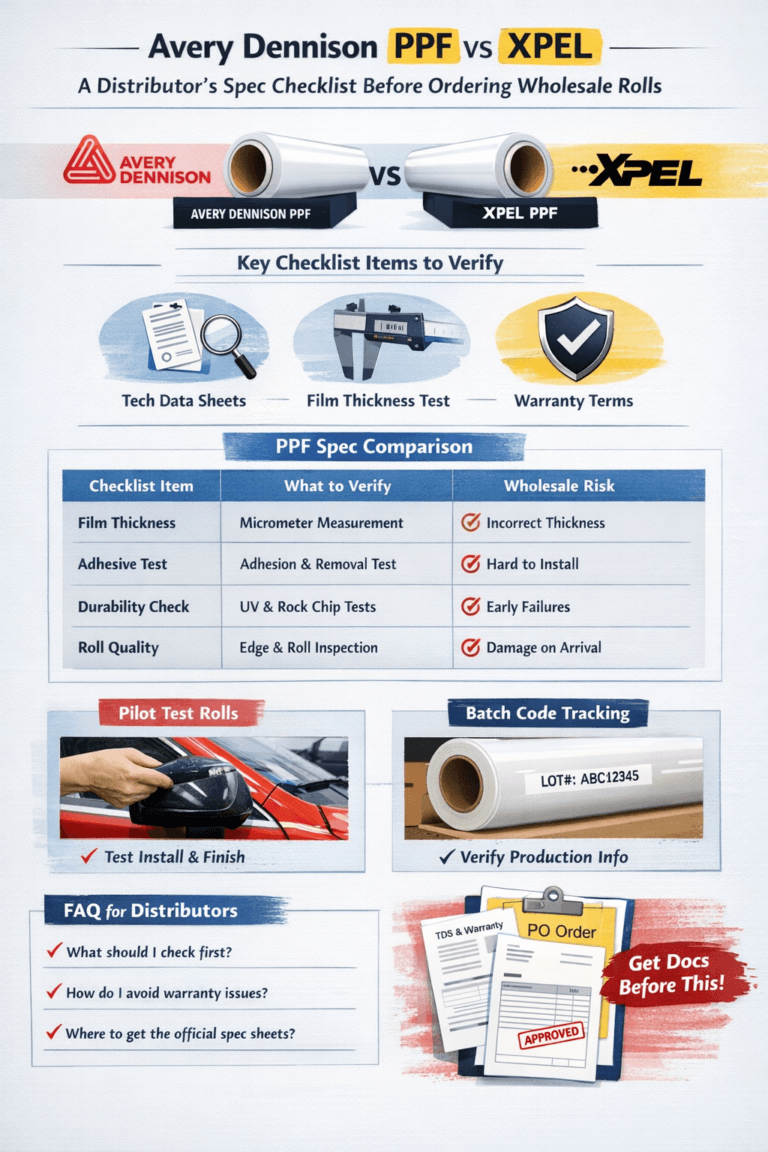
The “stek ppf vs xpel” discussion is common among shops because both brands are widely recognized in premium PPF conversations. For business buyers, the comparison should be structured around installation efficiency, finish consistency, warranty handling, and customer satisfaction drivers in your specific region.
Instead of picking a single winner, many ppf distributors treat this as portfolio design:
Stock one premium flagship line for brand-driven buyers
Stock a value-focused clear paint protection film (ppf) line for volume accounts
Use samples and installer feedback to decide which line expands over time
Practical comparison criteria for wholesale and pro shops
| Criteria | STEK PPF (typical positioning) | XPEL (typical positioning) | What It Means for Your Business |
|---|---|---|---|
| Finish and gloss | Often marketed as high gloss | Strong brand reputation, widely requested | Influences conversion rate in showroom sales |
| Installer workflow | Depends on line and conditions | Many installers already familiar | Affects training cost and speed-to-scale |
| Brand pull | Premium visibility in some markets | Very strong awareness in many markets | Helps distributors sell through faster |
| Warranty story | Varies by program | Often a major selling point | Impacts how you handle complaints and claims |
| Inventory strategy | Can anchor premium catalog | Can anchor premium catalog | Portfolio balance matters more than one SKU |
Stocking decision framework for a PPF distributor
If your market is brand-driven and installers demand familiarity: prioritize what your top shops request most.
If your market is value-sensitive but wants premium finish: keep one premium flagship and one high-margin “workhorse” roll.
If you are scaling wholesale accounts: pick the line with fewer install failures in real conditions – cold starts, heavy curves, rushed installs.
Benefits and Future of OEM Integration
For B2B buyers, OEM integration is less about “factory-installed only” and more about how OEM-level expectations shape the product: stable quality, predictable behavior, and fewer long-tail issues. If you’re a paint protection film supplier, this is your opportunity to sell reliability, not just features.
Business benefits for distributors and professional installers
Higher ticket size per vehicle (clear PPF upgrades remain easy to bundle)
Lower rework rate when quality is consistent
Easier account retention because fleets and dealers value stability
Better brand positioning for shops that want to move upmarket
What’s next for wholesale PPF
You’ll likely see continued demand for:
Tougher topcoats that stay consistent across climates
Improved stain resistance for urban and industrial environments
Faster installer workflows (less tack shock, cleaner repositioning)
More refined “hybrid” positioning with coating-like marketing language
For a ppf supplier or ppf manufacturer building long-term share, the winning strategy is simple: consistency, support, and a catalog that makes it easy for installers to sell and install at scale.
FAQ
What should a wholesale buyer prioritize when choosing OEM paint protection film?
Prioritize roll-to-roll consistency, adhesive stability (especially edge lift resistance), clear documentation (spec sheet and warranty), and reliable defect handling. The best OEM paint protection film for your catalog is the one that reduces rework and protects your installer relationships.
Is clear paint protection film (PPF) always the best-selling SKU for distributors?
In most markets, yes. Clear paint protection film (ppf) typically provides the largest total addressable demand because it fits nearly all vehicles and supports multiple price tiers. Colored films can be profitable but usually require tighter SKU control and stronger installer capability.
What roll specs matter most when buying a paint protection film roll for resale?
Focus on width options, thickness tolerance, liner quality, and adhesive behavior in your real installation temperatures. A paint protection film roll that installs predictably will outperform a “better on paper” roll that causes failures under cold or rushed installs.
How can a PPF supplier reduce returns and complaints from pro shops?
Provide samples, publish clear installation guidelines, standardize core SKUs, and set a fast defect-resolution policy. Training support and consistent packaging/labeling also reduce handling mistakes.
Should a new distributor stock both STEK PPF and XPEL?
If you can support the inventory and your market is brand-driven, stocking both can help you capture more accounts. If capital is tight, start with one flagship brand and one high-margin “volume” clear PPF line, then expand based on installer pull-through.
In the STEK PPF vs XPEL discussion, what matters most for shop profitability?
Install speed, failure rate, and how claims are handled. A product that saves 20-30 minutes per job and reduces redo work often produces better margins than a slightly “better looking” film that installs unpredictably.
References
[1] XPEL – Paint Protection Film (https://www.xpel.com/products/paint-protection-film)
[2] XPEL – ULTIMATE PLUS Paint Protection Film (https://www.xpel.com/products/paint-protection-film/ultimate-plus)
[3] STEK – Paint Protection Film (https://www.stek-usa.com/paint-protection-film/)
[4] STEK – DYNOshield Paint Protection Film (https://www.stek-usa.com/dynoshield/)
[5] 3M – Scotchgard Paint Protection Film (https://www.3m.com/3M/en_US/p/c/films-sheeting/paint-protection-films/)
[6] Eastman – LLumar Paint Protection Film (https://llumar.com/automotive/paint-protection-film)
[7] SEMA – Paint Protection Film overview and industry context (https://www.sema.org/)
[8] International Window Film Association – Industry resources (https://iwfa.com/)
[9] ISO 9001 Quality Management Systems – Overview (https://www.iso.org/iso-9001-quality-management.html)