If you read enough installer threads, you’ll notice something: most “best PPF” debates are really “best outcomes under my conditions.” Wholesale buyers (ppf distributor teams, pro shops, stek distributor applicants) care less about marketing claims and more about predictable installs, stable supply, and low defect risk.
This page is written as a community-style buyer’s guide for:
- PPF distributors building a wholesale catalog
- Professional installers buying paint protection film roll inventory
- B2B buyers evaluating STEK PPF (and similar premium lines) under stek wholesale programs
- Anyone sourcing OEM paint protection film-grade consistency (batch-to-batch stability)
The Questions Buyers Actually Ask Before Buying a Roll
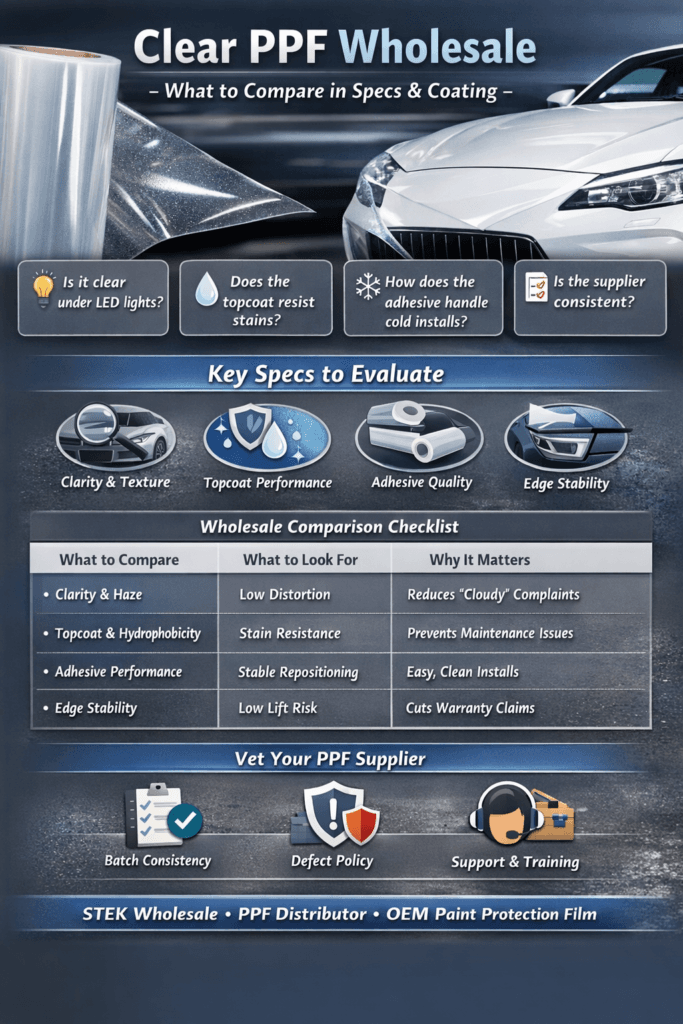
These are the recurring questions that show up in group chats and shop-to-shop conversations:
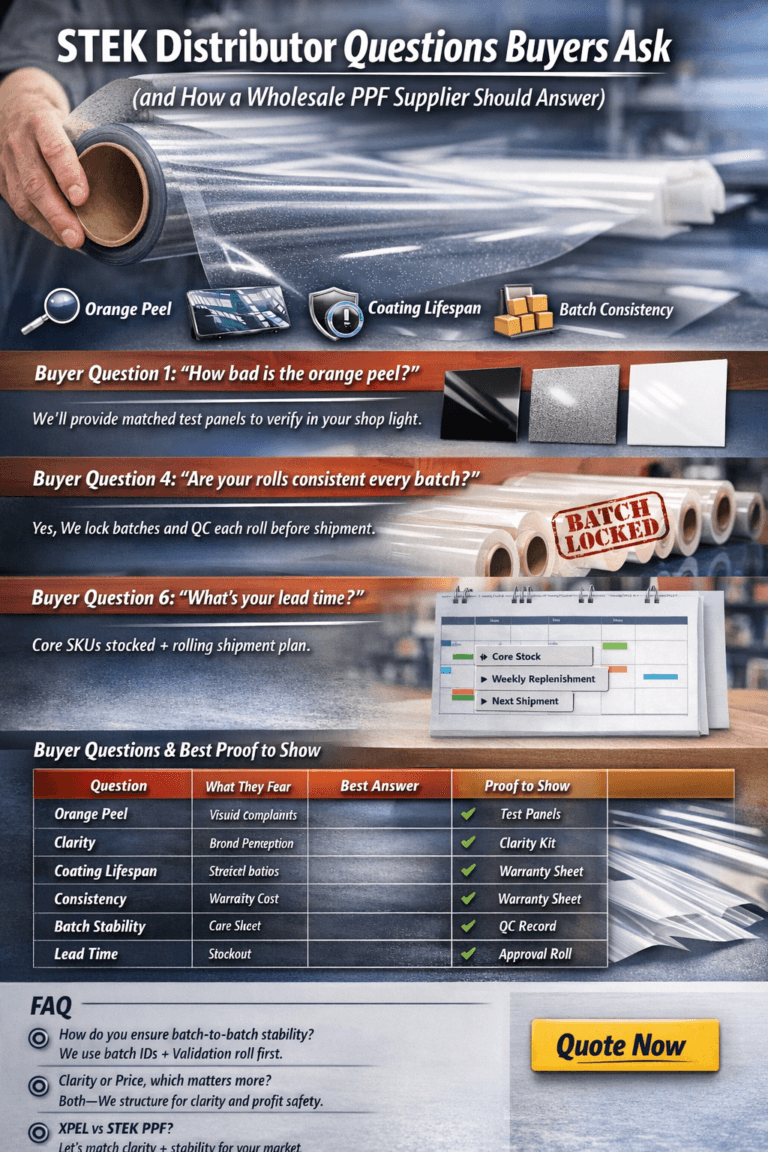
- “Is it truly clear under LED lights, or does it show texture?”
- “Does the topcoat stay slick after washes, or does it load up and stain?”
- “How does the adhesive behave in cold installs or humid climates?”
- “Do I need one premium SKU or a 3-tier catalog for sell-through?”
- “Is the supplier consistent, or do I get ‘good batches’ and ‘bad batches’?”
If you’re positioning yourself as a paint protection film supplier (or a ppf distributor), your advantage is being able to answer these questions with a spec-driven checklist.
Clear Paint Protection Film (PPF) Specs That Change Install Outcomes
Most listing pages say “self-healing” and “hydrophobic.” Community discussions focus on what causes rework.
Here’s what actually changes outcomes for clear paint protection film (PPF):
1) Visual clarity and texture (what customers notice)
- Clarity under harsh lighting: Showroom LEDs can expose haze, micro-texture, and distortion.
- Orange peel level: Too much texture can trigger “it looks like plastic” complaints.
- Gloss matching: Mismatch between film and paint can cause partial coverage jobs to look uneven.
2) Topcoat behavior (what maintenance reveals)
- Stain resistance: Bug acids, bird droppings, water spots, and traffic film.
- Hydrophobic performance: Helps maintenance, but should be stable over time (not just “day one”).
- Self-healing response: More important for daily drivers and fleet usage than showroom-only builds.
3) Adhesive and liner system (what installers fight with)
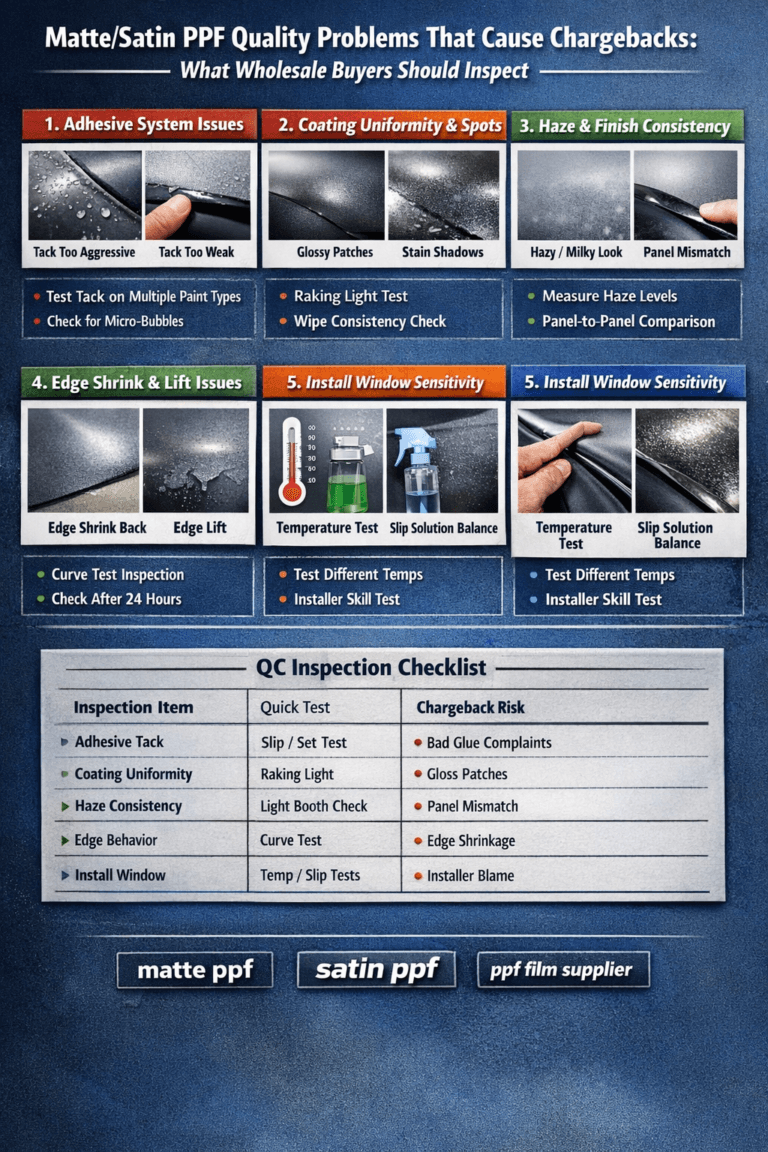
- Initial tack vs reposition window: Too aggressive = trapped fingers and alignment pain. Too weak = edge issues.
- Glue line risk: Uneven adhesive behavior can show as lines or marks on light colors.
- Liner release: Poor liner handling can cause contamination and slow installs.
4) Film handling (what controls speed and failure rate)
- Stretch and conformability: Bulk installs need predictable stretch without distortion.
- Edge stability: Edges that lift become warranty claims and reputation damage.
- Thickness feel: Not “thicker is better” – it’s “thickness that installs reliably in your market.”
Wholesale Comparison Table – Specs & Coating Checklist
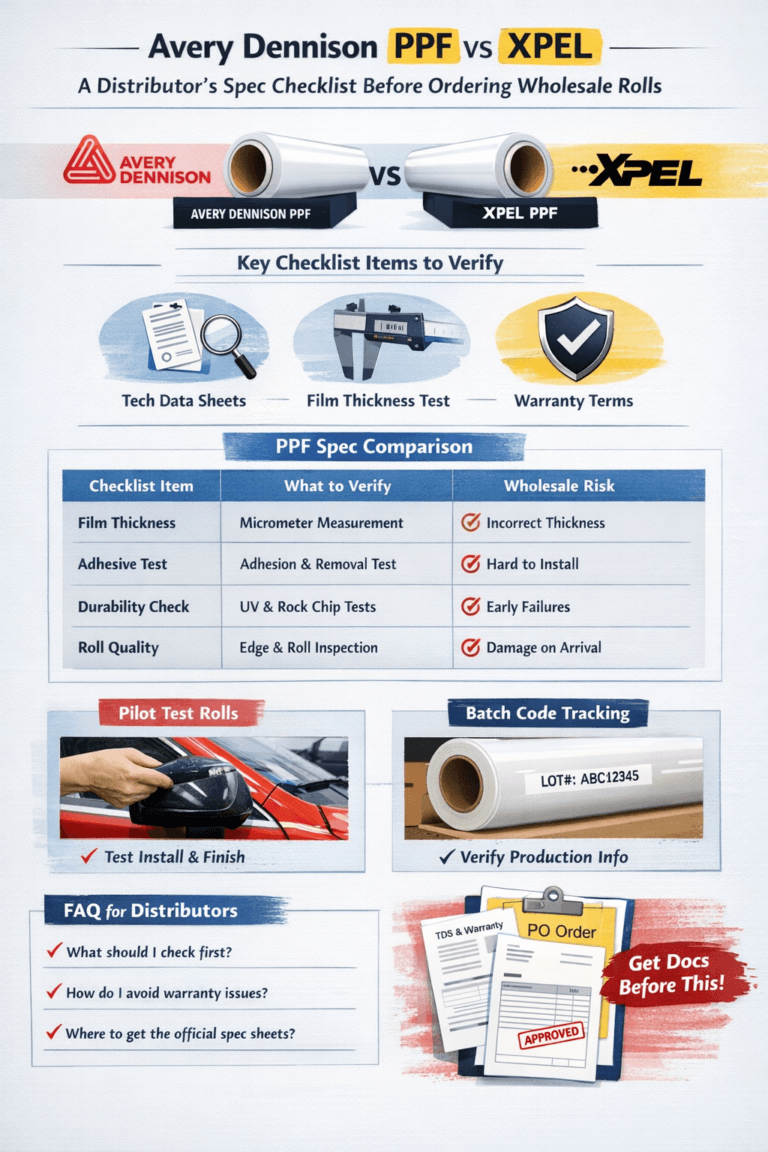
Use this as a buying worksheet when you’re comparing multiple lines (including STEK PPF options under stek wholesale, or alternative premium/value lines).
| What to Compare | What to Look For | Why It Matters for Wholesale Buyers |
|---|---|---|
| Clarity under LED | Low haze, low distortion | Reduces “looks cloudy” complaints and refunds |
| Surface texture | Controlled orange peel | Impacts perceived quality and upsell success |
| Gloss profile | Consistent gloss match | Helps partial coverage jobs look seamless |
| Topcoat type | Stable slickness + stain resistance | Drives long-term reviews and repeat business |
| Hydrophobic behavior | Maintenance-friendly (not just marketing) | Fewer water-spot and wash complaints |
| Self-healing | Real-world recovery from light marring | Cuts “micro-scratch” callbacks |
| Adhesive behavior | Repositionable, stable, clean finish | Faster installs, fewer glue-line issues |
| Liner quality | Clean release, contamination control | Less waste and less installer frustration |
| Stretch behavior | Predictable conforming | Supports bulk installs and complex panels |
| Edge stability | Low lift risk | Directly reduces warranty claims |
| Roll format | Width/length SKUs that match demand | Improves sell-through and lowers scrap |
| Batch consistency | Documented QC, stable output | Keeps distributors from “bad batch” churn |
OEM Paint Protection Film vs “Aftermarket Grade” – How to Think Like a Distributor
OEM paint protection film, in practical wholesale terms, usually means tighter expectations:
- consistent raw inputs and production control
- fewer cosmetic defects per roll
- predictable adhesive behavior for scale installs
- traceability (so issues can be isolated quickly)
If you’re a ppf distributor, the OEM mindset is valuable even if you sell aftermarket channels. It’s how you justify premium pricing: reliability and reduced labor risk.
Supplier Reality Check – Vet a Paint Protection Film Supplier Like a Pro
A paint protection film supplier is not just a vendor – they are part of your warranty and reputation chain.
Supplier checklist (what experienced buyers ask for)
- Sample-to-bulk match: Does the production roll match the sample kit?
- Defect policy: What happens when a roll has flaws? What proof is required?
- Consistency controls: How do they manage batch variation?
- Packaging and labeling: Roll ID, batch ID, storage guidance, handling notes
- Lead times and allocations: Can they support spikes without “quality drift”?
- Claims and support speed: How quickly do they respond when shops are blocked?
If you’re sourcing STEK wholesale specifically, treat it the same way: confirm support terms, program rules, and what “authorized” actually changes for you operationally (training, warranty handling, account protection, etc.).
Building a Roll Catalog That Actually Sells Through
A common distributor mistake is stocking too many SKUs too early. Community advice tends to converge on a simple model:
A practical 3-SKU wholesale catalog (starter)
- Core clear PPF roll: your volume mover, easiest install, widest compatibility
- Premium clear PPF (STEK PPF-style tier): highest gloss/feel story for upsells
- Value clear PPF: price anchor for competitive markets and fleet accounts
Optional expansion (only after sell-through proves demand)
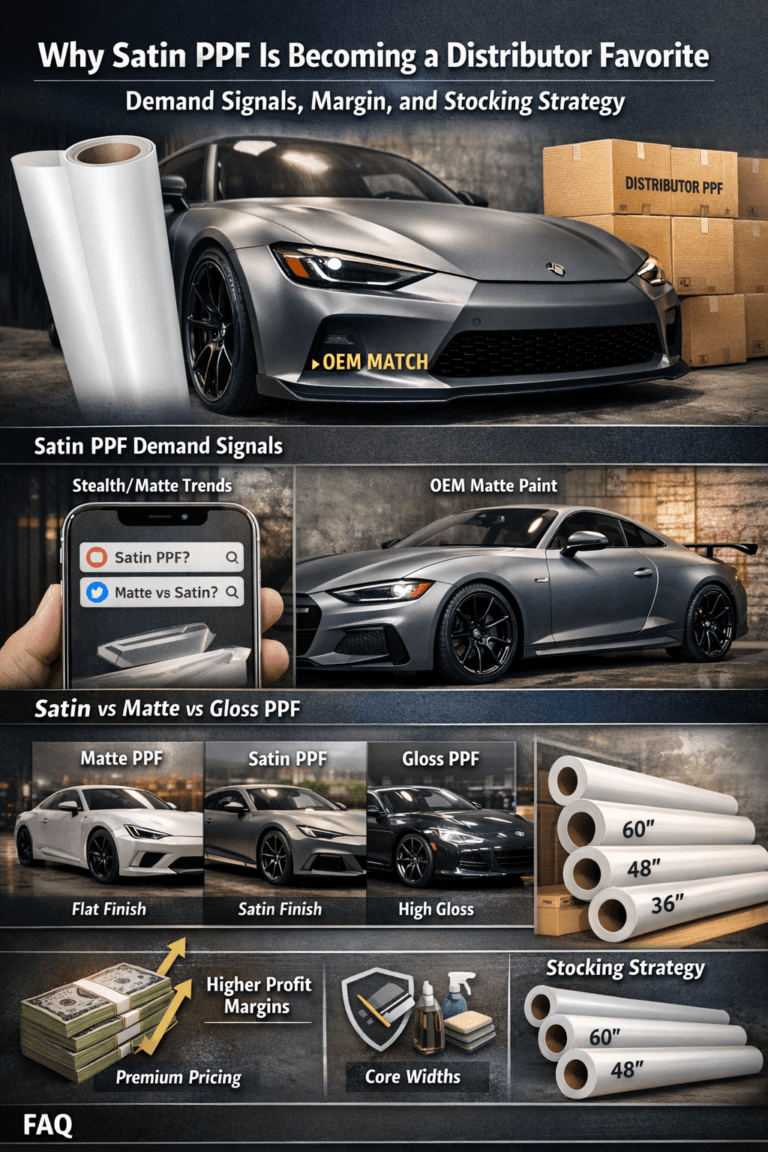
- Matte / satin
- Special finishes
- More widths for specific shop cutting habits
This approach lets a ppf supplier or ppf distributor scale without inventory bloat.
FAQ
What should a PPF distributor prioritize when buying clear paint protection film (PPF) wholesale?
Prioritize batch consistency, installer-friendly adhesive behavior, and stable topcoat performance (gloss/feel/stain resistance). Wholesale success is about sell-through and low rework, not just spec sheets.
How do I compare STEK PPF options under a stek wholesale program?
Compare them using the same worksheet: clarity, texture, topcoat behavior, adhesive/liner system, and edge stability in your real install conditions. Also verify program support: training resources, defect handling, and warranty process.
What roll sizes should I stock first as a paint protection film supplier?
Start with the roll widths and lengths that match your region’s most common install patterns and vehicle mix. The best first SKU set is the one that minimizes scrap and avoids dead inventory.
Is “OEM paint protection film” always higher quality?
Not automatically. “OEM” often signals tighter consistency expectations, but you should still verify sample-to-bulk match, QC controls, and defect policies. Judge by outcomes: install speed, failure rate, and customer feedback.
What causes the most callbacks in clear PPF installations?
In community discussions, the big drivers are texture/clarity dissatisfaction under lighting, edge lift, visible adhesive marks, and staining/water-spot issues. These are controlled by topcoat + adhesive system + consistent manufacturing.
How can a ppf manufacturer or supplier prove consistency to wholesale buyers?
Provide batch traceability, clear QC documentation, consistent packaging/labeling, and a straightforward defect resolution policy. Consistency beats flashy claims in B2B.
References
[1] STEK USA – Paint Protection Film (https://www.stek-usa.com/paint-protection-film/)
[2] STEK USA – DYNOshield Paint Protection Film (https://www.stek-usa.com/paint-protection-film/dynoshield/)
[3] XPEL – Paint Protection Film (https://www.xpel.com/products/category/automotive-protection-film)
[4] 3M – Scotchgard Paint Protection Film Pro Series (https://www.3m.com/3M/en_US/p/d/b40066706/)
[5] 3M – Paint Protection Film Pro Series 200 (https://www.3m.com/3M/en_US/p/d/b5005352002/)
[6] LLumar – Paint Protection Film (https://llumar.com/na/en/automotive/paint-protection-film/)
[7] Eastman – Urethane Paint Protection Film (https://www.eastman.com/en/products/product-detail/71100690/films-urethane-paint-protection-with-pressure-sensitive-adhesive)
[8] International Window Film Association (IWFA) – Resources (https://iwfa.com/)
[9] ISO – ISO 9001 Quality Management Overview (https://www.iso.org/iso-9001-quality-management.html)